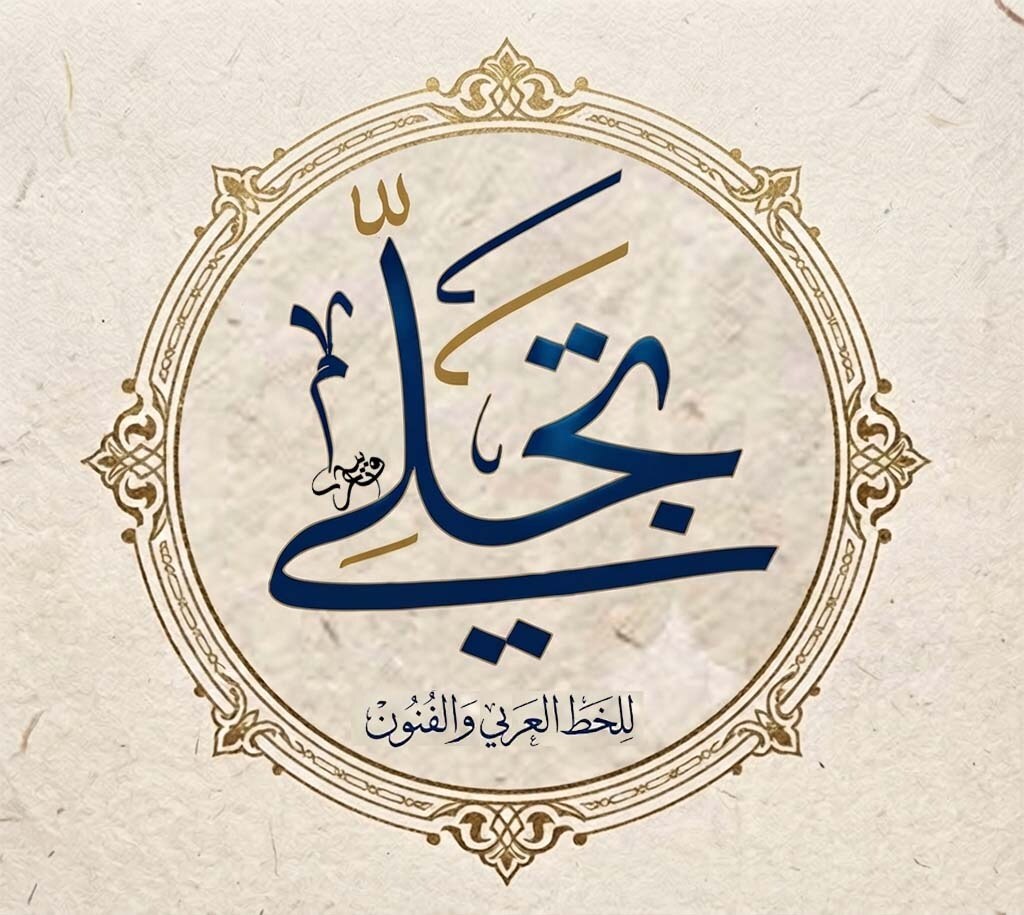
Tajalli — تجلّي — means a manifestation: the moment something hidden becomes visible. It is what happens when a reed pen meets paper and a word takes on a form you can stand in front of.
The artist
[Replace this paragraph with Qassem’s story.] Where he is from, where he trained, who he studied under, and how long he has been working. Two or three sentences is plenty — visitors want to know whose hand made the work in front of them.
[Replace this paragraph with the scripts he works in and anything that sets his hand apart.] Thuluth, Naskh, Diwani, Kufic — whichever he has spent his years on. Mention exhibitions, teachers, ijazah, or commissions he is proud of, if any.
The work
Every piece here is written by hand. Nothing is generated, traced or printed from a font. The letters are cut with a reed pen, the ink is prepared rather than poured from a bottle, and the gold is laid leaf by leaf. That is why a single panel can take days, and why no two are identical.
Original works are available to buy outright, and most pieces can also be supplied as archival prints or as high-resolution digital files. Commissions are welcome — a name, a verse, a date, a dedication — and begin with a conversation about the words, the script and the size.
The Quran project
Alongside the commissioned work, Qassem is writing the complete Quran by hand — every surah, every ayah, page after page, in classical script. It is the work of years rather than months, and it is supported by people who want to see it finished.